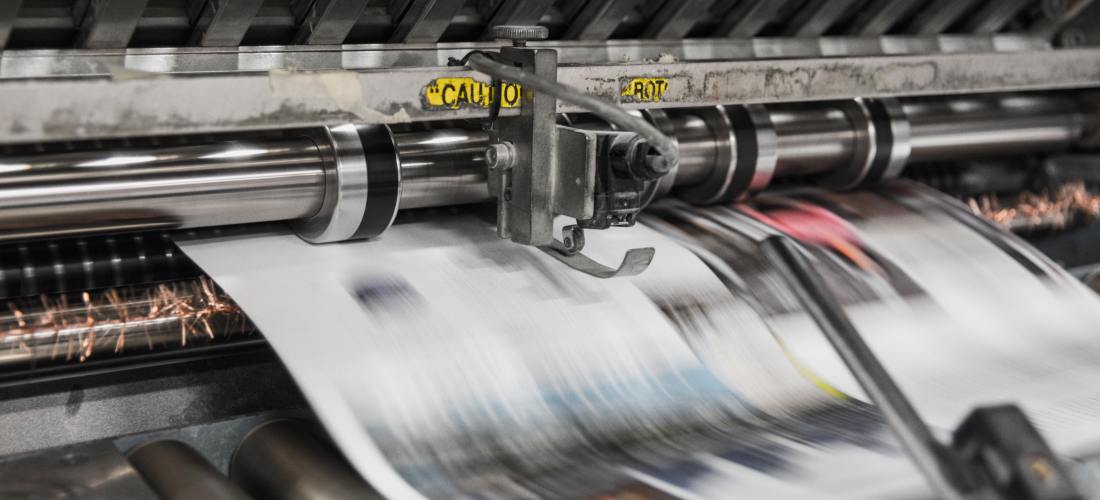
From Screen to Page: Finding the Best Printer

Publishing Blog

First-time authors often travel the print-on-demand route when deciding how to get their book out into the world. It’s fast. It’s safe. It’s cheap. Sounds like a pretty good deal, right?

Wrong.

Print-on-demand services seem great on the surface. Companies like Ingram Spark allow authors to print books as customers order them. This can seem like the safest option for many authors because no bulk orders are necessary. However, this route smashes an author’s chances of making any profit off of their books.

When I made it to the printing stage of publishing Would You Like a Hug? I was tempted to go with a print-on-demand company. I had no idea if my book would sell many copies, so print-on-demand seemed like the safest option at the time. However, print-on-demand is not worth the sense of security that it provides. Companies like Ingram Spark often charge authors $10-15 per book, which means that authors only make a couple dollars of profit on each book sold. That’s not even enough to cover the costs that go into publishing a book.

So, I took a leap. I had faith in myself and my business, and I took a risk. I found a great printing company overseas, and I paid $4,000 to print 1,000 hardcover copies of my book, which is about four dollars per book. I now have an apartment full of book boxes and some anxiety that I might not sell all of them, but it’s worth it. Ordering a bulk amount allows me to sell my books at a reasonable price and still make enough of a profit to earn back the money that I put into publishing the book.

If you’re considering a print-on-demand company to print your books without risk, please reconsider. Ordering a thousand books at one time might feel daunting, but all of those boxes piled up in your house will be your motivation to keep going.

Now go print! You’ve got this.

illustrator

How to Find the Right Illustrator

Publishing Blog

Illustrations are an important, if not the most important, aspect of any children’s book. When parents and children browse the shelves, it’s the pictures that catch their eyes. It can be tempting to cut corners on illustrations to save money, but this is the one step in the publishing process where you do not want to cut corners.

Illustrations for a 32-page picture book typically cost anywhere between $4,000 and $15,000. This may seem daunting at first, but there is a lot of work that illustrators put into bringing your story to life, and it is worth the cost to have a book that is both well-written and visually appealing. It’s important to find an illustrator that not only has quality artwork, but also matches the art style that you imagine for your book. There are some important things to consider as you search for the right illustrator.

What style are you looking for?

Illustrators bring their own unique style, art mediums and strengths to a book. Some illustrators have a cartoon-like style with exaggerated facial features and bright colors for the characters that they create. Other illustrators have a more simplistic style for their characters. Some illustrators paint with watercolors while others focus mainly on digital mediums. Make sure that you look at a wide variety of illustrators and choose the style that best fits your story. It is important to look at all of the artwork that artists include in their portfolio to ensure that they are able to create all of the characters and scenes in your book. If an illustrator draws beautiful animals but lacks examples of people in their illustrations, you might want to consider if they would be a right fit for the characters in your book. In my search for an illustrator I came across many illustrators that I loved, but I had to pass on many of them because their style did not match my envisioned style for some of my characters. The illustrator that I decided on had examples of both people and animals that I felt matched the style that I pictured for my book. Make sure that the illustrator you choose is able to create images of all of your story aspects, not just some.

What can you afford?

Think realistically about what you are able to afford, and keep in mind that some illustrators can work with you to accept monthly payments if you cannot afford to pay the entire cost up-front. Another way to make illustrations more affordable is to ask your illustrator if they can do spot illustrations instead of full-page illustrations. Spot illustrations often feature a character or scene with a blank background. Some books feature a few pages with spot illustrations, and some books are made up entirely of spot illustrations. These are a couple ways to make illustrations more affordable, but overall illustrations are usually one of the most expensive parts of self-publishing a book. If you cannot afford quality illustrations yet, you should consider waiting until you can afford them rather than settling for an illustrator that cannot match the quality or style that you envision for your book.

Does the illustrator have experience creating images for books?

Some artists create illustrations for marketing, wall art and other purposes. Before hiring an illustrator make sure that they have experience illustrating children’s books. There are certain things that illustrators need to keep in mind as they illustrate your book so that it will print at the right dimensions and not compromise the margins or bleeds of the images. There are also other details that experienced illustrators account for, such as leaving room on each page for text placement. Before deciding on an illustrator, check their website to see if they have illustrated books in the past and be sure to ask them if they are aware of the correct bleeds, color models and dimensions needed to fully design your book.

Do you have a contract?

Before hiring an illustrator, make sure that you have a contract that you both agree on. A contract should include compensation details, a timeline, any extra costs for sketch revisions, and any compensation that will be required if either the author or illustrator decide to cancel the project. It is important that the contract addresses these topics in detail.

How to search for the right illustrator

It is possible to find illustrators through a simple Google search, but I found that it is much easier to search on Instagram with tags such as #illustrator or #illustration. You can also get more creative and detailed with your search by using specific tags related to your book, such as #bearillustrations or #forestillustrations. This allows you to browse artwork quickly and then follow profiles of artists that you like. Illustrators’ profiles will often link to their website and contact information that you can use to learn more about them and their availability. Another way to find illustrators is by searching illustration agencies and databases such as http://www.childrensillustrators.com

However you decide to find your illustrator, have fun and make sure that they are the right fit for you and your book.

4 Things to Consider Before Self-Publishing

Publishing Blog

If you’ve been trying to get your book published the traditional way, you probably know that 99.9% of the process feels like collecting rejection letters from literary agents. They receive thousands of manuscript submissions, and it’s difficult to stand out in the crowd. However, this doesn’t mean that your work is bad.

I 100% believe that rejection letters are just stepping stones toward reaching your goal and that you shouldn’t give up. But what about when you feel a drive to make your goals happen yourself? What about when you’re tired of waiting? That’s when self-publishing might become the right path.

However, it’s important to know what to expect before taking off. I won’t pretend to be an expert on the process, but I have collected some great information from my journey of mistakes, setbacks, failures and successes as I published my first children’s book, Would You Like a Hug?

1. When you self-publish, you get to make all of the decisions

Aside from skipping the rejection letters from agents, the biggest positive of self-publishing is having control over your work. You get to choose the illustrator. You get to choose how the book is arranged. You get artistic freedom to create the book that you envision.

2. With artistic freedom also comes responsibility

Self-publishing gives you artistic freedom to make decisions about your book, but it also leaves you with the task of making sure your book is successful. You are responsible for managing deadlines with an editor, illustrator, book designer and printer. You are responsible for choosing the most cost-effective route for printing your books. You are responsible for marketing your book so that people even know it exists. Essentially, you are starting your own business when you self-publish, so make sure it is what you really want before you start.

Which leads to my next important point…

3. Self-publishing can be expensive

The costs of self-publishing vary depending on page-count, how many illustrations you need, the type of illustrations you need, where you decide to print, and other factors. I cannot provide exact numbers for what to expect when self-publishing, because it will be different for everyone, but I can provide the approximate amount that I spent on each step of my process.

Editing

I have friends and family with backgrounds in editing, as well as critique groups through SCBWI, but I still chose to have my manuscript reviewed by a couple professional editors to make sure I didn’t miss any changes that needed to be made. For quality editing you can expect to pay around $200-$400, but this is an important step in the process.

Illustrations

It is possible to find illustrators who will provide illustrations at very low costs, but after searching many agencies and freelance illustration portfolios online, I found that quality illustrations typically start around $4,000-$5,000. I even spoke with one illustrator who charges $15,000 to illustrate a book. Before you decide to self-publish, search around and see if there are any illustrators that match your desired art style and your budget. It’s important to choose a quality illustrator because this is one of the most important aspects of children’s books. I worked an extra job to pay for illustrations, and while it was a very rough year of long hours, it was so worth it in the end.

Book design

Book design typically costs $500-$1,000. Book designers format books, combining the illustrations and text so that everything flows together well. They create the book file with the correct dimensions and page bleeds so that you have a print-ready file to send to a printing company. Without a well-designed book you risk the text or illustrations being cut off the edge of the page, or extra white space along the edges of pages. Book design is an important part of the process.

Printing

Printing is one of the most expensive parts of the self-publishing process. Many companies will offer print-on-demand services, but this is not ideal if you are trying to earn back the money you spent to publish your book or make a profit on book sales. Print-on-demand is a service that allows your book to be printed each time it is ordered, but the price to print each book is often equal to the price of the book, so it is very difficult to make enough money on book sales to make up for the other costs of publishing your book. It is much more cost-effective to order books in bulk (minimum of 1,000 books) and ship books to customers as they order. The cost to print per book lowers as you order a higher quantity of books. Overall, I paid between $4,000-$5,000 to print 1,000 hardcover books and have them shipped to my house. I can now sell the hardcover books from my house and hopefully earn back the amount that I put into publishing and printing the book (I will continue to post updates about the process, but my sales are a little slow starting out).

Amazon KDP is also an option, and this is how I chose to publish the paperback copies of my book. KDP is print-on-demand, so Amazon will print each book as it is ordered, and I receive a small payment from Amazon for each book sold. As I mentioned before, print-on-demand is not ideal for authors. My paperback books are listed for $12.99 on Amazon, but for each book sold I only receive about $3-4 per book. While this isn’t a terrible amount to make from book sales, it is very difficult to build back the funds you put into publishing from selling print-on-demand books. I will most likely find more results from selling and shipping my hardcover books through my website. Another thing to keep in mind is that if you want to sell books through Amazon KDP’s print-on-demand service, you can only print paperbacks. You can sell hardcover books through Amazon, but the print-on-demand option is not available for the hardcover format.

There are many different options for printing (I will go into more detail on this in a future blog post), but keep in mind that the costs of printing are often very high.

4. Self-publishing is a long process, but it’s worth it.

A big part of the self-publishing process is waiting. Waiting for illustrations. Waiting for the completion of book design. Waiting for book proofs and final copies to ship. However, it’s worth it when you finally hold the first copy in your hands or share your story with a classroom. All of the waiting is worth it when a parent tells you that their child asks them to read your book to them every night. It’s a long process, but it’s worth it.