What Are the Best Children’s Books About Consent?

Children's Activities

Teaching kids about consent helps them set and maintain boundaries for themselves and respect the boundaries of others. Here are the best children’s books to help you teach your little one about consent:

Would You Like a Hug?

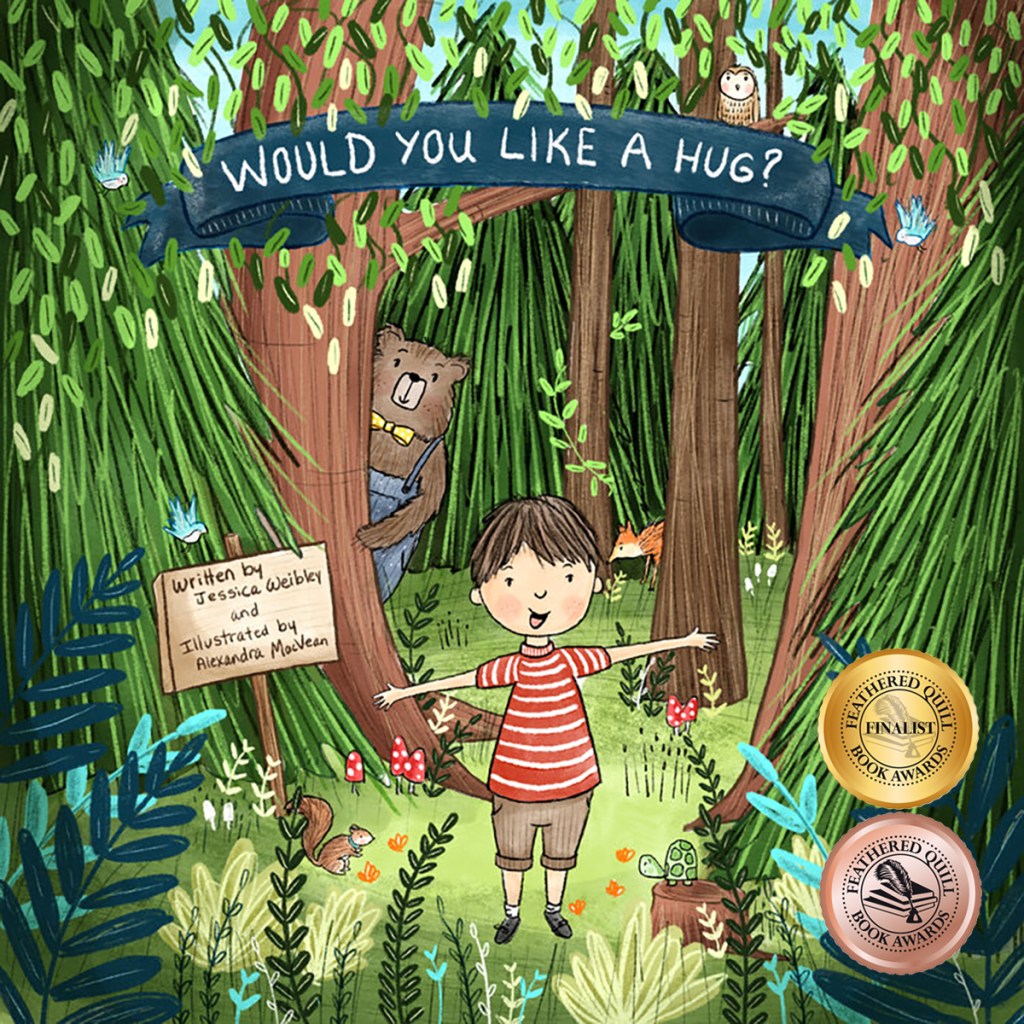
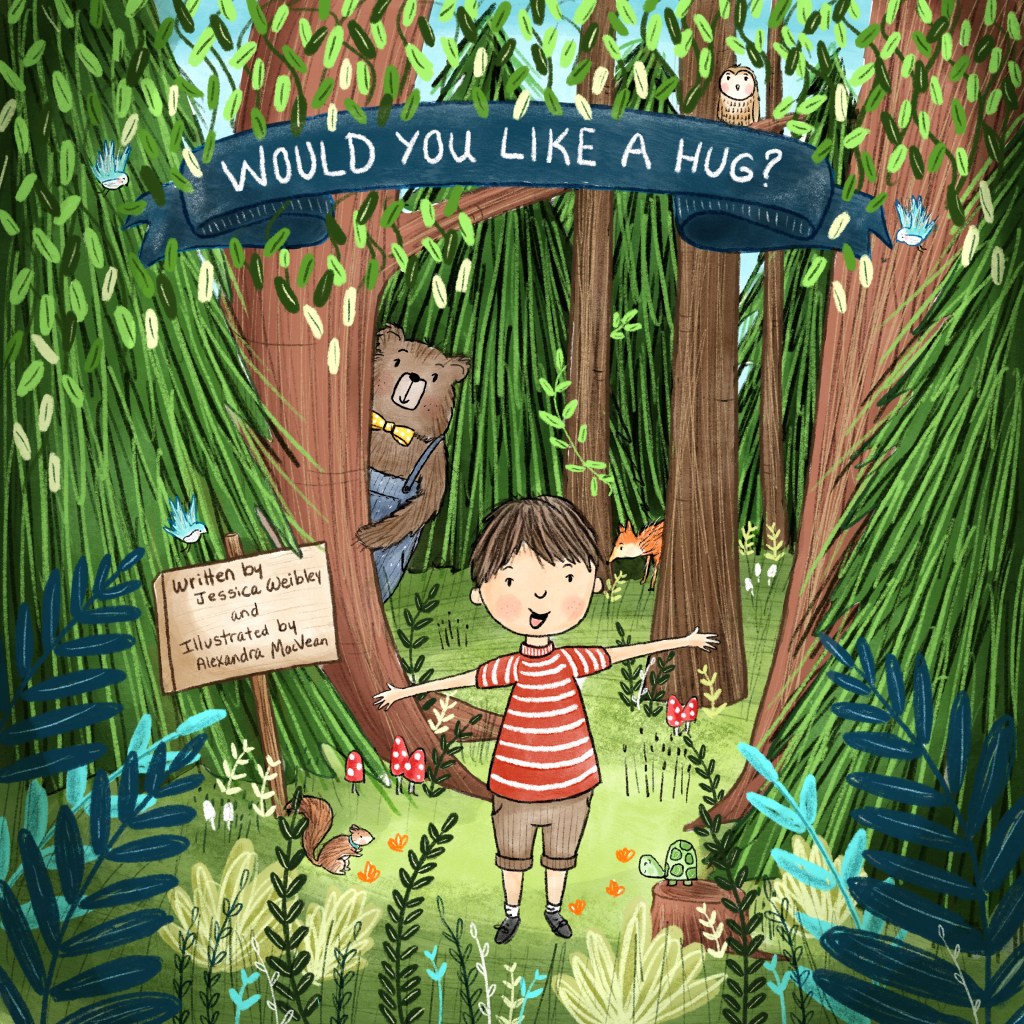
Follow Gus and Grumpy Bear through the forest in search of a hug. Gus learns that not everyone likes hugs, and he finds a hug from one of the most unlikely of friends. Would You Like a Hug? is a heartwarming book about consent, respecting boundaries, and learning that it’s okay to say “no” and ask for help when you need it.

You can also download a fun discussion guide to help your children or students understand the lessons hidden in Would You Like a Hug?

Don’t Hug Doug

Don’t Hug Doug by Carrie Finison is another sweet book about hugs. This fun tale helps kids understand when it’s okay to give a hug and when it’s better to offer a high-five instead.

Yes! No!: A First Conversation About Consent

Yes! No!: A First Conversation About Consent by Megan Madison and Jessica Ralli is more of a didactic book than a storybook. This adorably illustrated board book teaches young children about bodily autonomy and the many ways to say “no.”

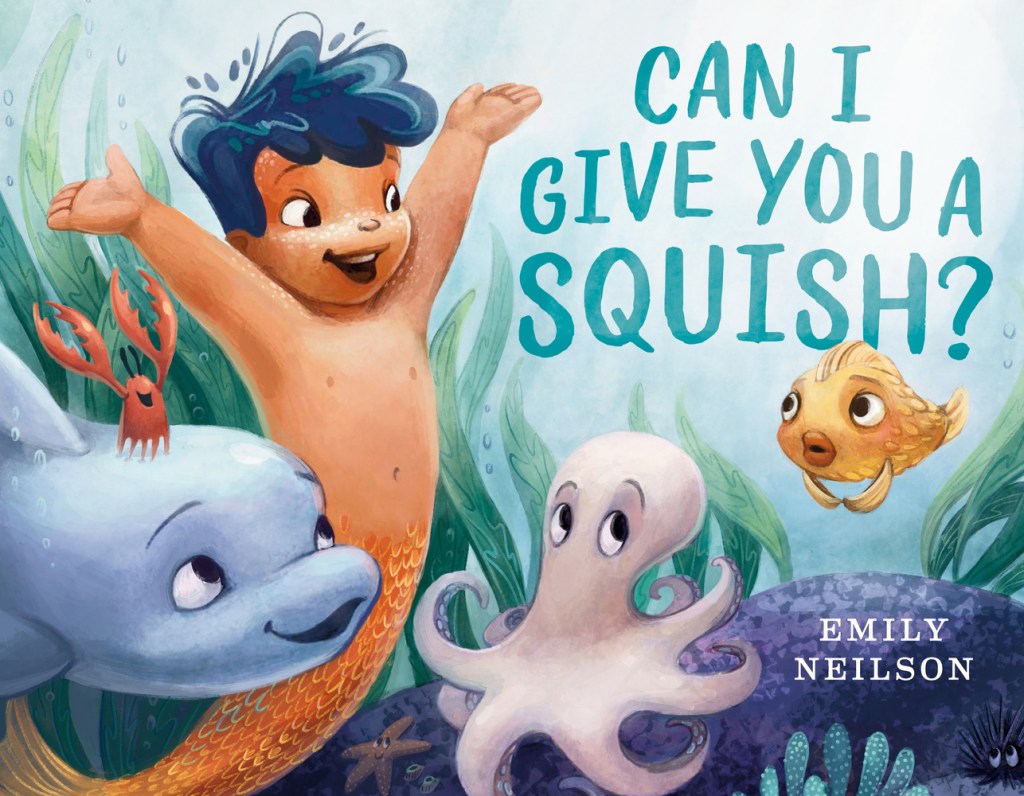
Can I Give You a Squish?

Can I Give You a Squish? by Emily Neilson follows a mer-boy named Kai through the ocean as he learns various ways to greet friends and show affection when others don’t like hugs.

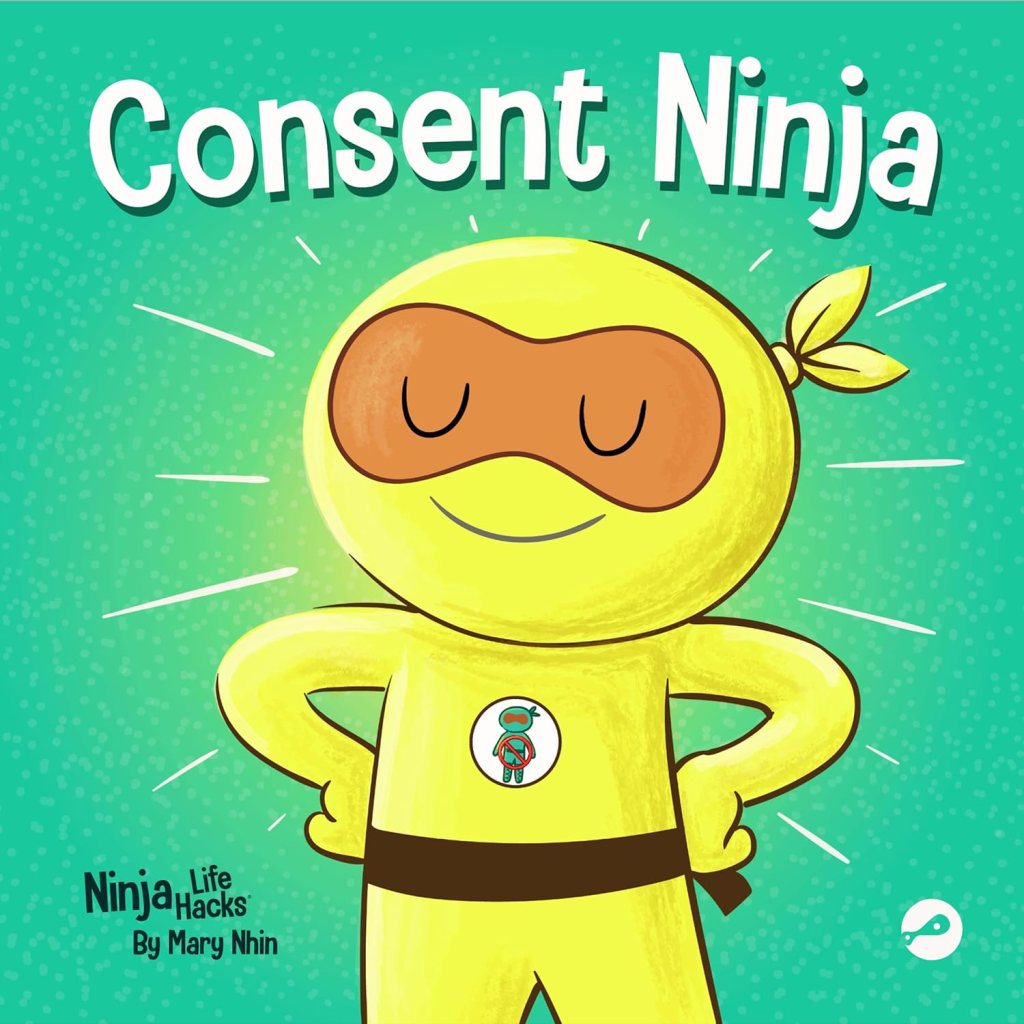
Consent Ninja

Consent Ninja by Mary Nhin is a unique book about a little ninja who learns how to set boundaries and say “no” in uncomfortable situations. This didactic book helps kids develop strategies for being in charge of their own bodies and speaking up for themselves.

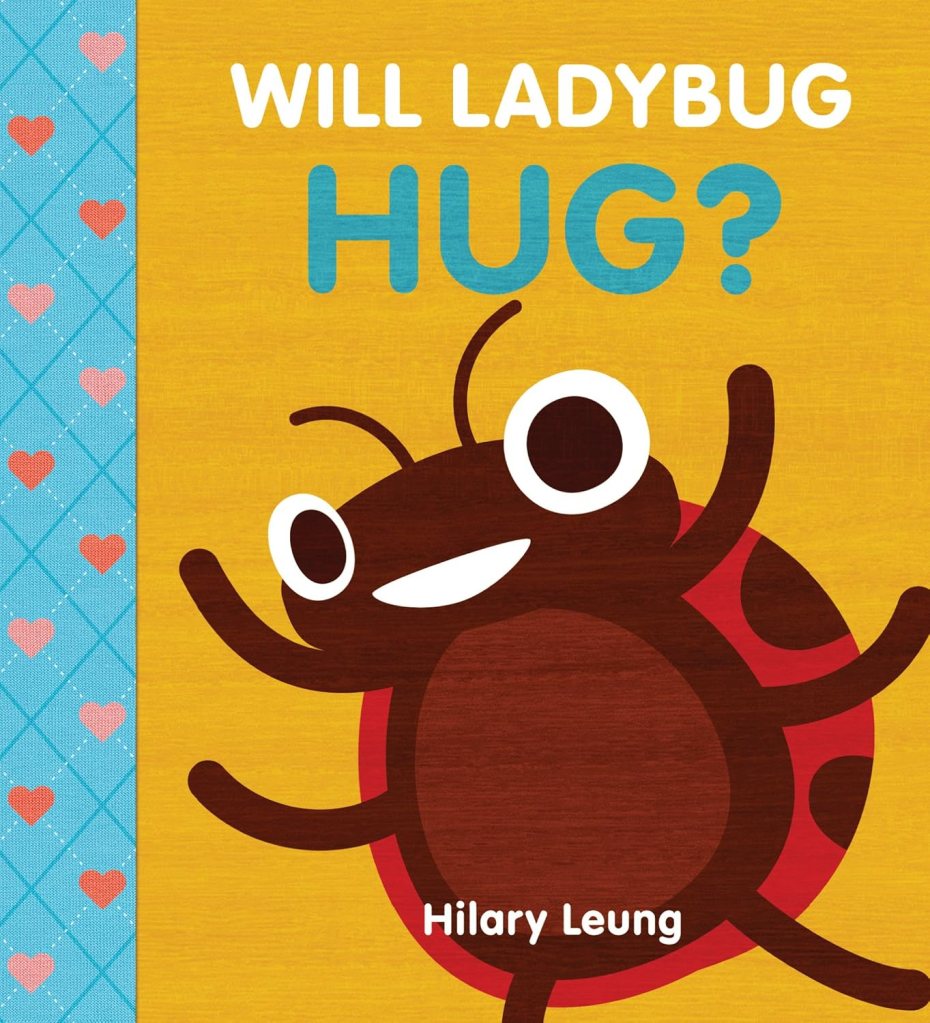
Will Ladybug Hug?

Will Ladybug Hug? by Hilary Leung is a fantastic board book for your youngest little ones. This sweet, simple story helps kids learn that some friends love hugs, some don’t, and that’s okay.

Why Use Books to Teach Kids About Consent?

Books offer the following advantages when teaching kids about consent:

Age-Appropriateness

Storybooks and board books introduce the topic of consent in age-appropriate ways. Explaining concepts such as bodily autonomy and boundaries is easier when you read a book with fun characters and situations kids can relate to.

Memorable Lessons

Research shows that reading about characters overcoming challenges significantly influences children’s behavior. A memorable book with a positive message can stick with your child for years, helping them carry lessons well into adulthood.

Quality Time

Reading with your child helps them feel safe, loved and connected. Storytime may feel like a simple part of the day, but it creates memories you and your little one will treasure forever.

Teach Your Kids About Consent With a Heartwarming Storytime

Reading is a fantastic way to connect with your child or young students and teach them about boundaries. There are several children’s books about consent you can enjoy with your little ones, giving them a fun, memorable way to learn about bodily autonomy.

Add Would You Like a Hug? to your bookshelf, and take your little one on an adventure through the forest with Gus and Grumpy Bear.

Picture from Would You Like a Hug? – Written by Jessica Weibley and illustrated by Alexandra MacVean

How Do You Teach Small Children About Consent?

Children's Activities

Consent is an important topic that many people assume to be too advanced for little ones. However, it’s more than possible to teach consent to toddlers and young children in a way that they will understand.

Teaching the concept of consent to little ones is a great way to teach them about respect, empathy, kindness and setting boundaries. Teach your child consent to help them stay safe and grow into a respectful, kind individual.

We should talk to kids about consent because it teaches them how to respect themselves as well as others. It teaches them how to set boundaries, how to speak up for themselves and how to recognize and respect others’ boundaries.

Teaching children how to set boundaries for themselves and speak up when they feel unsafe is important because abuse can happen anywhere. Approximately 91% of child sexual abuse cases involve a perpetrator that the child or their family is familiar with. This is why your children should know that they can set and enforce boundaries for themselves even with people that they know.

When children know they can set personal boundaries and have trusted adults they can go to for help, they are more likely to speak up when anyone makes them feel unsafe or uncomfortable. When they learn that they don’t have to give a hug to a relative if they’re not comfortable, they also learn that they have a right to set boundaries with everyone around them.

It’s also important that children learn at a young age to respect others’ boundaries, which is part of social emotional learning (SEL). SEL is important for toddlers and school age children because it helps them develop the skills necessary to navigate adulthood. The goal of social emotional learning is to promote children’s social-awareness, self-awareness, self-management, decision making skills and relationship skills so that they develop qualities such as self-control and empathy as they grow.

When little ones learn how to respect the boundaries of others, they learn how to be kind. They learn how to recognize others’ needs and show empathy. While we should teach children that hugs are a great way to spread kindness, it’s also important to teach them to recognize when a friend might need some space.

Kids can learn about consent at any age. While it’s a common topic in high school health classes, it’s also a topic we can introduce to preschoolers. Preschoolers can learn the basic foundations of consent such as setting boundaries, respecting boundaries and understanding that they can speak up if anyone makes them feel uncomfortable. Parents and caregivers can even lay the foundations for teaching consent to infants and toddlers by explaining what they are doing during basic care routines or asking a toddler before giving them a hug.

Talking to children about consent can be simple, and you don’t even have to use the word, “consent,” at all. You can explain to your child in ways they’ll understand that it’s okay to say “no” if anyone makes them feel uncomfortable. If you’re wondering how to talk to your child about consent, consider the following tips:

Introduce Simple Phrases

Use language that is clear and consistent when you talk about consent with young children. Teach them simple phrases they can use such as “I don’t like that,” “no, thank you,” “I don’t want a hug right now,” “this is my body” or “please stop.”

You can begin teaching consent to your child from infancy. Talk to your baby or young toddler while you change their diaper or perform other care routines, and explain what you’re doing with phrases like, “I’m going to help you onto the changing table” or “I’m going to get a new diaper for you.” Even if your baby doesn’t fully understand what you’re saying, it will help their language development, and they will eventually learn what you are telling them as their vocabulary grows.

Set an Example

Model consent for your children so they have an example to look up to. Ask your child before giving them a hug, and ask them if they would like you to help them perform tasks such as brushing their teeth, bathing or getting dressed. While many of these tasks are necessary, giving your child the choice to accept help or practice independence will grow their confidence.

If your children are still young enough to need your help with basic care tasks, you can give them choices such as completing the tasks in the moment or waiting a few minutes. If they don’t want you to help them brush their teeth or comb their hair, give them the choice to let you help them now or wait two minutes. This lets them know that the task is necessary, but it also gives them the chance to make a personal choice about their body.

Find Teachable Moments

Use everyday teachable moments to teach your little one about consent. If they rush to give a friend a hug as you pick them up from daycare, remind them to ask first. If you attend a family cookout and an aunt or uncle tries to pick your child up when they feel uncomfortable, remind them that it’s okay to say, “no.” If your child doesn’t feel like giving hugs after Easter dinner, you can ask them to give high-fives or a friendly wave instead.

Use Books as a Fun Teaching Aid

Read fun stories about consent to introduce the topic to your child. Children love books, and reading books together is a great way to bond with your little one. Read the heartwarming story, Would You Like a Hug?, to your child to introduce the topic of consent in a fun and age-appropriate manner.

Follow Gus and Grumpy Bear through the forest as Gus searches for a hug. Throughout the story, discuss each character with your child and how Gus respects their personal boundaries. Children will love joining Gus and Grumpy Bear on their adventure, and they will enjoy a heartwarming surprise at the end. Purchase Would You Like a Hug? to plan your next story time adventure with your little one.

Kool-Aid Playdough Recipe

Children's Activities

This fun and easy recipe is a great activity for your little ones or students to do with you. Send photos of your coolest playdough creations to us at jessicaweibleyauthor@gmail.com!

This recipe for Kool-Aid Playdough only requires 5 ingredients and is super easy to make! Join Grumpy Bear in making some cool playdough creations and share your favorites with us!

What you’ll need:

1 cup flour

1/2 cup salt

1 packet of Kool-Aid (use 2 packets for extra color/scent)

3 tablespoons oil

1 cup boiling water

Directions

Combine one cup of flour, half a cup of salt and one (or two) packet(s) of Kool-Aid in a bowl and stir. Add 3 tablespoons of oil and then one cup of boiling water to the bowl and stir again. When the mixture is cool enough to touch, knead it until it reaches a playdough consistency.

Little ones can help to stir the dry ingredients and knead the dough after it is cool enough to touch.

Enjoy!

August Reading Challenge

Children's Activities

Want to get your little ones more interested in reading? Try August’s reading challenge with Grumpy Bear and send us photos of your four-legged friends enjoying story time! Encourage your little ones to read to their pets or to new friends at your local animal shelter. Reading out loud to a friend gives kids confidence and makes books even more fun for them. Today, Grumpy Bear read Would You Like a Hug? to his friend, Luna. We can’t wait to see your favorite reading companions! Email your photos to us at jessicaweibleyauthor@gmail.com. Happy reading!

From Screen to Page: Finding the Best Printer

Publishing Blog

First-time authors often travel the print-on-demand route when deciding how to get their book out into the world. It’s fast. It’s safe. It’s cheap. Sounds like a pretty good deal, right?

Wrong.

Print-on-demand services seem great on the surface. Companies like Ingram Spark allow authors to print books as customers order them. This can seem like the safest option for many authors because no bulk orders are necessary. However, this route smashes an author’s chances of making any profit off of their books.

When I made it to the printing stage of publishing Would You Like a Hug? I was tempted to go with a print-on-demand company. I had no idea if my book would sell many copies, so print-on-demand seemed like the safest option at the time. However, print-on-demand is not worth the sense of security that it provides. Companies like Ingram Spark often charge authors $10-15 per book, which means that authors only make a couple dollars of profit on each book sold. That’s not even enough to cover the costs that go into publishing a book.

So, I took a leap. I had faith in myself and my business, and I took a risk. I found a great printing company overseas, and I paid $4,000 to print 1,000 hardcover copies of my book, which is about four dollars per book. I now have an apartment full of book boxes and some anxiety that I might not sell all of them, but it’s worth it. Ordering a bulk amount allows me to sell my books at a reasonable price and still make enough of a profit to earn back the money that I put into publishing the book.

If you’re considering a print-on-demand company to print your books without risk, please reconsider. Ordering a thousand books at one time might feel daunting, but all of those boxes piled up in your house will be your motivation to keep going.

Now go print! You’ve got this.

Spring Adventures

Children's Activities

Grumpy Bear is getting ready for spring! We are sad that we are not able to visit schools yet, but we are very excited to start sharing the book with students via Zoom calls!

Grumpy Bear was very busy in February celebrating Valentine’s Day, enjoying some snow days and sharing the book with some students at Grace B. Luhrs Elementary School in Shippensburg. This month, Grumpy Bear is excited to meet some students and celebrate that Spring is almost here!

Zoom author visits include a reading of the book by the author, as well as some surprise visits from book characters! If your school or daycare would like to hear a special reading of Would You Like a Hug? and meet Grumpy Bear, email jessicaweibleyauthor@gmail.com to schedule a Zoom meeting. We can’t wait to meet some new friends!

illustrator

How to Find the Right Illustrator

Publishing Blog

Illustrations are an important, if not the most important, aspect of any children’s book. When parents and children browse the shelves, it’s the pictures that catch their eyes. It can be tempting to cut corners on illustrations to save money, but this is the one step in the publishing process where you do not want to cut corners.

Illustrations for a 32-page picture book typically cost anywhere between $4,000 and $15,000. This may seem daunting at first, but there is a lot of work that illustrators put into bringing your story to life, and it is worth the cost to have a book that is both well-written and visually appealing. It’s important to find an illustrator that not only has quality artwork, but also matches the art style that you imagine for your book. There are some important things to consider as you search for the right illustrator.

What style are you looking for?

Illustrators bring their own unique style, art mediums and strengths to a book. Some illustrators have a cartoon-like style with exaggerated facial features and bright colors for the characters that they create. Other illustrators have a more simplistic style for their characters. Some illustrators paint with watercolors while others focus mainly on digital mediums. Make sure that you look at a wide variety of illustrators and choose the style that best fits your story. It is important to look at all of the artwork that artists include in their portfolio to ensure that they are able to create all of the characters and scenes in your book. If an illustrator draws beautiful animals but lacks examples of people in their illustrations, you might want to consider if they would be a right fit for the characters in your book. In my search for an illustrator I came across many illustrators that I loved, but I had to pass on many of them because their style did not match my envisioned style for some of my characters. The illustrator that I decided on had examples of both people and animals that I felt matched the style that I pictured for my book. Make sure that the illustrator you choose is able to create images of all of your story aspects, not just some.

What can you afford?

Think realistically about what you are able to afford, and keep in mind that some illustrators can work with you to accept monthly payments if you cannot afford to pay the entire cost up-front. Another way to make illustrations more affordable is to ask your illustrator if they can do spot illustrations instead of full-page illustrations. Spot illustrations often feature a character or scene with a blank background. Some books feature a few pages with spot illustrations, and some books are made up entirely of spot illustrations. These are a couple ways to make illustrations more affordable, but overall illustrations are usually one of the most expensive parts of self-publishing a book. If you cannot afford quality illustrations yet, you should consider waiting until you can afford them rather than settling for an illustrator that cannot match the quality or style that you envision for your book.

Does the illustrator have experience creating images for books?

Some artists create illustrations for marketing, wall art and other purposes. Before hiring an illustrator make sure that they have experience illustrating children’s books. There are certain things that illustrators need to keep in mind as they illustrate your book so that it will print at the right dimensions and not compromise the margins or bleeds of the images. There are also other details that experienced illustrators account for, such as leaving room on each page for text placement. Before deciding on an illustrator, check their website to see if they have illustrated books in the past and be sure to ask them if they are aware of the correct bleeds, color models and dimensions needed to fully design your book.

Do you have a contract?

Before hiring an illustrator, make sure that you have a contract that you both agree on. A contract should include compensation details, a timeline, any extra costs for sketch revisions, and any compensation that will be required if either the author or illustrator decide to cancel the project. It is important that the contract addresses these topics in detail.

How to search for the right illustrator

It is possible to find illustrators through a simple Google search, but I found that it is much easier to search on Instagram with tags such as #illustrator or #illustration. You can also get more creative and detailed with your search by using specific tags related to your book, such as #bearillustrations or #forestillustrations. This allows you to browse artwork quickly and then follow profiles of artists that you like. Illustrators’ profiles will often link to their website and contact information that you can use to learn more about them and their availability. Another way to find illustrators is by searching illustration agencies and databases such as http://www.childrensillustrators.com

However you decide to find your illustrator, have fun and make sure that they are the right fit for you and your book.

4 Things to Consider Before Self-Publishing

Publishing Blog

If you’ve been trying to get your book published the traditional way, you probably know that 99.9% of the process feels like collecting rejection letters from literary agents. They receive thousands of manuscript submissions, and it’s difficult to stand out in the crowd. However, this doesn’t mean that your work is bad.

I 100% believe that rejection letters are just stepping stones toward reaching your goal and that you shouldn’t give up. But what about when you feel a drive to make your goals happen yourself? What about when you’re tired of waiting? That’s when self-publishing might become the right path.

However, it’s important to know what to expect before taking off. I won’t pretend to be an expert on the process, but I have collected some great information from my journey of mistakes, setbacks, failures and successes as I published my first children’s book, Would You Like a Hug?

1. When you self-publish, you get to make all of the decisions

Aside from skipping the rejection letters from agents, the biggest positive of self-publishing is having control over your work. You get to choose the illustrator. You get to choose how the book is arranged. You get artistic freedom to create the book that you envision.

2. With artistic freedom also comes responsibility

Self-publishing gives you artistic freedom to make decisions about your book, but it also leaves you with the task of making sure your book is successful. You are responsible for managing deadlines with an editor, illustrator, book designer and printer. You are responsible for choosing the most cost-effective route for printing your books. You are responsible for marketing your book so that people even know it exists. Essentially, you are starting your own business when you self-publish, so make sure it is what you really want before you start.

Which leads to my next important point…

3. Self-publishing can be expensive

The costs of self-publishing vary depending on page-count, how many illustrations you need, the type of illustrations you need, where you decide to print, and other factors. I cannot provide exact numbers for what to expect when self-publishing, because it will be different for everyone, but I can provide the approximate amount that I spent on each step of my process.

Editing

I have friends and family with backgrounds in editing, as well as critique groups through SCBWI, but I still chose to have my manuscript reviewed by a couple professional editors to make sure I didn’t miss any changes that needed to be made. For quality editing you can expect to pay around $200-$400, but this is an important step in the process.

Illustrations

It is possible to find illustrators who will provide illustrations at very low costs, but after searching many agencies and freelance illustration portfolios online, I found that quality illustrations typically start around $4,000-$5,000. I even spoke with one illustrator who charges $15,000 to illustrate a book. Before you decide to self-publish, search around and see if there are any illustrators that match your desired art style and your budget. It’s important to choose a quality illustrator because this is one of the most important aspects of children’s books. I worked an extra job to pay for illustrations, and while it was a very rough year of long hours, it was so worth it in the end.

Book design

Book design typically costs $500-$1,000. Book designers format books, combining the illustrations and text so that everything flows together well. They create the book file with the correct dimensions and page bleeds so that you have a print-ready file to send to a printing company. Without a well-designed book you risk the text or illustrations being cut off the edge of the page, or extra white space along the edges of pages. Book design is an important part of the process.

Printing

Printing is one of the most expensive parts of the self-publishing process. Many companies will offer print-on-demand services, but this is not ideal if you are trying to earn back the money you spent to publish your book or make a profit on book sales. Print-on-demand is a service that allows your book to be printed each time it is ordered, but the price to print each book is often equal to the price of the book, so it is very difficult to make enough money on book sales to make up for the other costs of publishing your book. It is much more cost-effective to order books in bulk (minimum of 1,000 books) and ship books to customers as they order. The cost to print per book lowers as you order a higher quantity of books. Overall, I paid between $4,000-$5,000 to print 1,000 hardcover books and have them shipped to my house. I can now sell the hardcover books from my house and hopefully earn back the amount that I put into publishing and printing the book (I will continue to post updates about the process, but my sales are a little slow starting out).

Amazon KDP is also an option, and this is how I chose to publish the paperback copies of my book. KDP is print-on-demand, so Amazon will print each book as it is ordered, and I receive a small payment from Amazon for each book sold. As I mentioned before, print-on-demand is not ideal for authors. My paperback books are listed for $12.99 on Amazon, but for each book sold I only receive about $3-4 per book. While this isn’t a terrible amount to make from book sales, it is very difficult to build back the funds you put into publishing from selling print-on-demand books. I will most likely find more results from selling and shipping my hardcover books through my website. Another thing to keep in mind is that if you want to sell books through Amazon KDP’s print-on-demand service, you can only print paperbacks. You can sell hardcover books through Amazon, but the print-on-demand option is not available for the hardcover format.

There are many different options for printing (I will go into more detail on this in a future blog post), but keep in mind that the costs of printing are often very high.

4. Self-publishing is a long process, but it’s worth it.

A big part of the self-publishing process is waiting. Waiting for illustrations. Waiting for the completion of book design. Waiting for book proofs and final copies to ship. However, it’s worth it when you finally hold the first copy in your hands or share your story with a classroom. All of the waiting is worth it when a parent tells you that their child asks them to read your book to them every night. It’s a long process, but it’s worth it.
Social-Distancing Activity for Kids: Scavenger Hunt With a Book Character

Children's Activities

If you’re looking for fun activities for your kids and you are able to take a walk while practicing social-distancing, follow along with one of the characters from Would You Like a Hug? on a fun scavenger hunt! Would You Like a Hug? is a picture book all about consent, respecting boundaries and how to be a good friend. It will be available in the Fall of 2020.

Follow @jessweibleyauthor on Instagram so that your kids can follow along with Grumpy Bear’s adventures, or check back for more updates!

  • Help your kids find the items on the list and take pictures of what you find on your adventures. If they have a favorite book character or stuffed animal at home, bring them along too! (If you are unable to take a walk, encourage your kids to create pictures of the items on the list using art materials you have at home).
  • Share your photos from your adventure by sharing them on Instagram and tagging @jessweibleyauthor with the hashtag #GrumpyBearScavengerHunt, or email your photos to jessicaweibleyauthor@gmail.com. I will share the submitted photos here on the book’s blog as well as on Instagram and Facebook.

Here are some updates from Grumpy Bear’s Adventures! Check back next week for more. If your kids or students would like to follow Grumpy Bear’s adventures daily, follow @jessweibleyauthor on Instagram.
Like and follow ‘Jessica Weibley Books’ on Facebook to see updates about the new book coming out in the Fall!

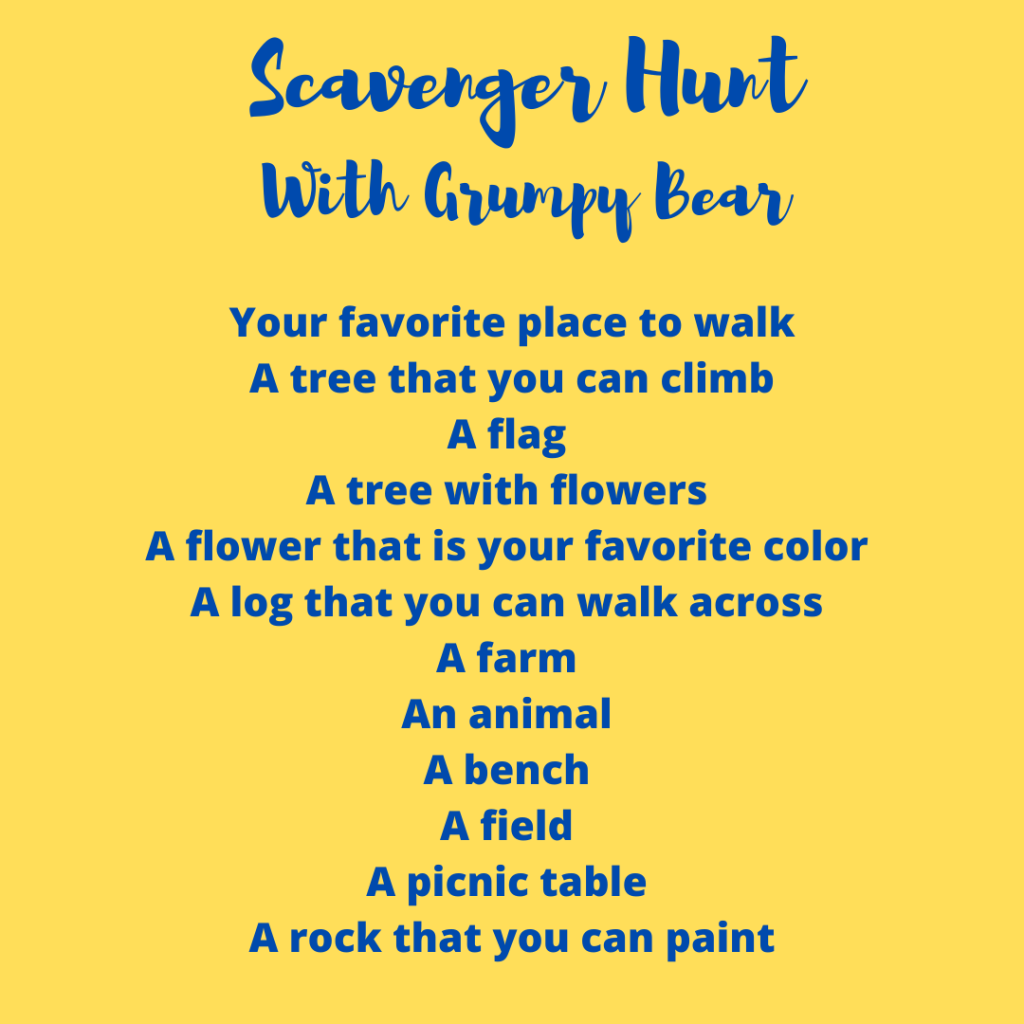
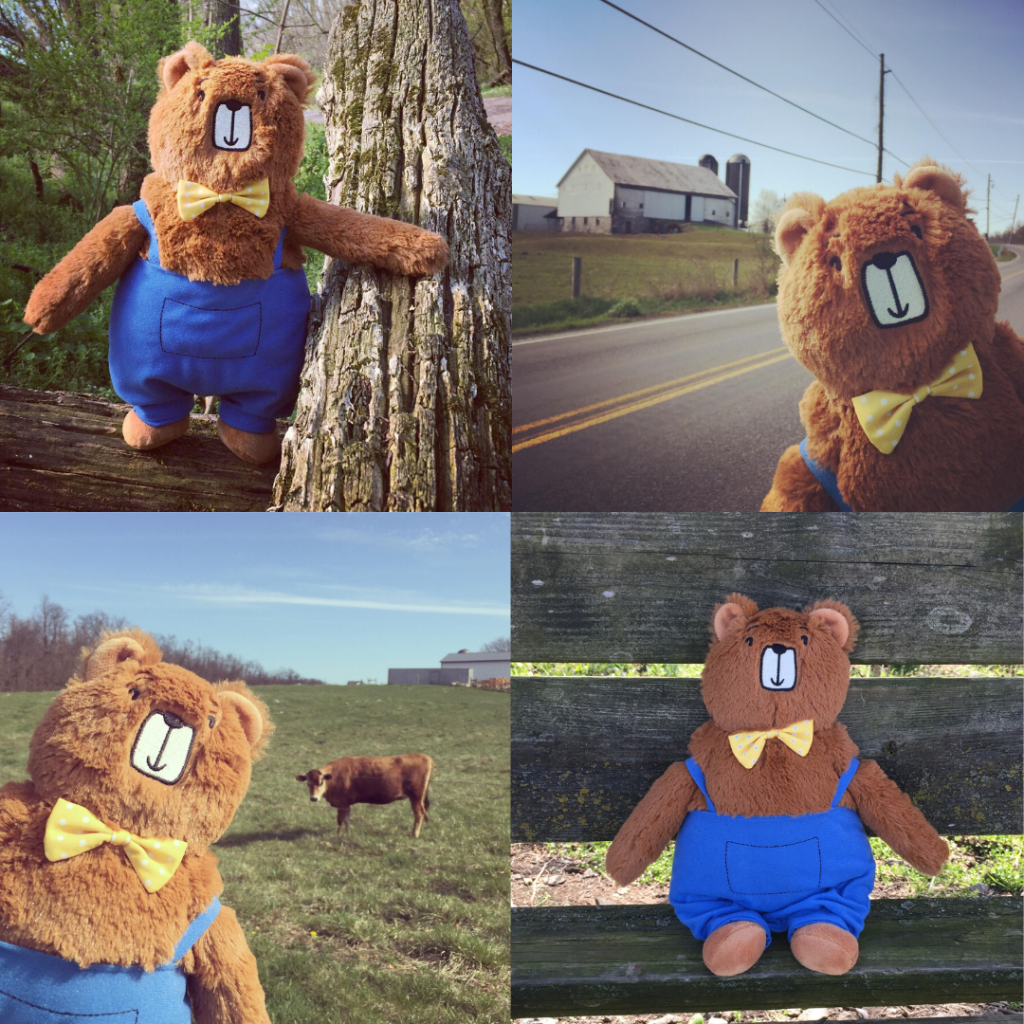
Grumpy Bear’s favorite place to walk is the Cumberland Valley Rail Trail in Shippensburg! On his walk, he found some cool trees to climb as well as a tree with white flowers. He decided to climb this tree, too, so that he could get a better look at the flowers. While walking past the Township Park, he found an American flag waving in the breeze, and later on the trail he found a yellow flower that matched his bow-tie. Grumpy Bear is a little sad that he can’t visit schools and meet new friends yet, but he is so excited to see what you find on your adventures! He wants to remind everyone to be safe and have fun!

On his walk, Grumpy Bear also found a log to walk across, a farm, an cow, and a bench to take a rest. Further down the trail, he found a field, a picnic table and a rock to paint. What did you find on your adventures? Send us your photos if you would like us to share them here!

Thanks for joining us on this adventure! Don’t forget to check back for more adventures and to order the book when it is available in the Fall of 2020! If your children or students would like the author and Grumpy Bear to visit their school or daycare, email jessicaweibleyauthor@gmail.com or check out the “School Visits” tab on the website!

Due to the spread of COVID-19, I will not be doing any in-person school visits until it is safe to do so. Until then, when the book is released I will be doing virtual readings of the book. If you would like more information about my presentations for students, or to plan an author visit for your school in the future, feel free to email me for more information.